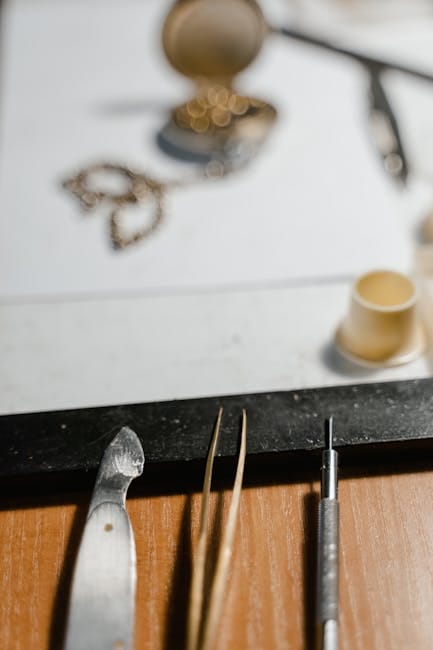
Rexhep Rexhepi walked into the Patek Philippe manufactory as a teenager and stayed for years. He rose through the complications department. He could have continued along the predictable path — salary, pension, rare watches at staff discount, the comfortable career that the Stern family engineers for their best craftsmen. He left in 2012 to found Akrivia with his brother Xhevdet in Geneva. The decision looked questionable at the time.
In 2026, Rexhepi is arguably the most influential independent watchmaker of his generation, and the decision looks like the cleanest professional move of the past fifteen years in horology. Chronomètre Contemporain II pieces trade for $280,000 in secondary markets against an original retail of $62,000. The waitlist is effectively closed. Auction results keep setting new records.
How Did This Happen
Three factors converged, and understanding the combination is important because each factor in isolation isn't enough.
First, pure horological quality. Rexhepi's watches are not clever. They're not high-complication showpieces. They're fundamentally straightforward time-only and small-seconds pieces that happen to be made with the technical competence and hand-finishing of 19th-century Geneva masters. The Chronomètre Contemporain is a hand-wound time-only watch with 82-hour power reserve. That's the complication summary. Everything else is quality of execution.
Second, independent positioning at exactly the right moment. Between 2018 and 2023, the serious collector market shifted hard toward independents. F.P. Journe waitlists became impossible. Philippe Dufour became mythical. De Bethune found its audience. The demand curve for small-batch hand-made watches outran supply, and Akrivia caught the wave at the exact right production scale.
Third, Rexhepi's personal story. The Albanian-Swiss independent who left Patek to build his own brand with his brother is narrative gold for the collector community. Every interview reinforces the story. Every watch ships with provenance. The story scales in ways that pure quality alone doesn't.
The Watches Themselves
The current core reference is the Chronomètre Contemporain II, launched in 2022 as the evolution of the original Contemporain. 38mm platinum or rose gold case (roughly 36mm on the wrist due to case architecture), hand-wound calibre RR-02 movement with independent deadbeat seconds pulled from vintage marine chronometer tradition, 82-hour power reserve, visible through sapphire caseback with hand-anglage that looks like it was done by someone who had the time to do it right.
The dial is the signature. Grand feu enamel on platinum base, produced by Donzé Cadrans in Le Noirmont — one of the last workshops in Switzerland still doing grand feu enamel at this finishing level. The dial has a slight cream warmth, which reads as aged immediately even on a brand-new watch. This is the aesthetic choice that separates Akrivia from contemporaries who use flat white lacquered dials.
The Roman numerals are hand-painted. The small seconds subdial at 6 o'clock is separately enameled and laid into the main dial — a construction detail called applied sub-seconds that most modern watchmakers skip because it's three times more labor than printing the subdial. Rexhepi's workshop does it because it creates a subtle depth that you can see at arm's length if you know to look for it.
The case architecture is worth studying. Stepped bezel, sharply defined lugs with hand-polished bevels on every edge, and a crown that uses Rexhepi's own double-gear construction for smooth winding. The case sides are mirror-polished to a standard that requires multiple passes on a zinc lapping wheel — a process that Akrivia does in-house rather than sending to third-party case finishers.
The Production Reality
Akrivia produces approximately 35 watches per year. That's total across all references. The Chronomètre Contemporain II accounts for roughly 20 of those. The rest are the more complicated AK-series references (tourbillons, perpetual calendars, the occasional minute repeater) which ship at prices above $400,000.
35 watches per year into a global collector market with effectively unlimited demand means every piece is spoken for years in advance. The waitlist mechanism at Akrivia is personal and opaque — Rexhepi decides who gets allocated based on relationships and instinct, which is within his rights as a sole owner of a tiny workshop but creates its own frustrations for collectors who think money should solve this problem.
Secondary market is the only practical path for new collectors. A Contemporain II at $280,000 on Phillips Auction or through specialized brokers like Mr Jenkins London is the current reality. The $62,000 retail number is effectively theoretical for anyone who didn't establish an Akrivia relationship before 2020.
The waitlist situation mirrors what happened with F.P. Journe around 2010 and with Patek Nautilus around 2017. Each time, a specific reference became unobtainable at retail, secondary market prices exploded, and a collector generation that couldn't get original allocation had to decide between overpaying on the secondary market or shifting attention to less hyped alternatives.
The Chronomètre Tourbillon Citizen Reference
In 2023, Akrivia partnered with Louis Vuitton on a limited edition tourbillon that remains the current halo piece in the collection. 30 examples total, production split across multiple dial variations. Retail was $280,000. Secondary market has been trading between $550,000 and $780,000 depending on dial.
This partnership matters for one specific reason: it signaled that Akrivia had graduated from promising independent to brand with institutional luxury partnerships. Louis Vuitton doesn't collaborate with small independents without vetting the workshop thoroughly. The partnership added credibility that Akrivia couldn't have manufactured internally.
It also generated media coverage that reached audiences beyond specialized watch collectors. Louis Vuitton's marketing machine brought Akrivia to people who had never heard of independent watchmaking, which has long-term consequences for brand awareness even though the partnership itself was a one-time collaboration.
Why This Changes Collecting
Three shifts in the collector market trace back to the Akrivia phenomenon.
First, hand-finishing has become the definable quality criterion again. For two decades (roughly 1995 to 2015), complications were the currency of serious watches. A tourbillon meant something. A perpetual calendar meant something. Simple time-only watches were considered lower-tier purchases for beginners. Akrivia's success with pure time-only construction — proving that a hand-wound three-hand watch could command $280,000 based on execution quality alone — shifted the conversation back toward finishing as the primary axis of value.
Second, small production is no longer a liability. Before Akrivia, small workshops were considered fragile. One founder, one workshop, one supply chain failure away from collapse. Now small production is considered a feature. Collectors actively seek out watchmakers whose output is measured in dozens rather than thousands, because scarcity has become explicitly valuable in ways that mid-century collecting didn't emphasize.
Third, the independent watchmaker has been recast as creative-auteur rather than journeyman craftsman. Rexhepi is profiled like an artist now. Interviews ask about his philosophy, his influences, his artistic development. This is a shift in category. F.P. Journe was treated as a brilliant technician. Rexhepi is treated as a creative intelligence whose watches happen to be the output medium. Whether this framing is accurate or flattering is debatable; it's clearly commercially successful.
What Collectors Actually Get Wrong
The common mistake is treating Akrivia as an investment rather than a collection object. The secondary market prices create an investment frame that distorts how the watches are discussed. But Rexhepi himself produces watches to be worn, not stored. His personal philosophy emphasizes wearing watches daily.
Buying an Akrivia to lock in a safe at $280,000 while watching the secondary market is the opposite of what the watch was designed to enable. It's also probably the dominant use case for recent secondary market buyers, which is part of why Rexhepi has become selective about allocations.
Another common mistake is comparing Akrivia to mass-market luxury brands on the same axes. Patek Philippe, Audemars Piguet, and Rolex all optimize for production consistency, global service networks, and brand recognition. Akrivia optimizes for none of those. Comparing a Contemporain II to a Patek Calatrava 5226 makes no sense except on the axis of what-does-it-cost, and even that comparison distorts what each watch is.
The Near-Term Future
Akrivia will probably grow production modestly over the next five years — Rexhepi has hinted at capacity for 50-60 pieces annually if the right craftsmen can be hired. This won't satisfy demand, but it will create slightly more access.
Secondary market prices are likely to stabilize or soften somewhat as more examples come to market. The $280,000 level for a Contemporain II has held for two years now; some normalization toward $220,000-$250,000 would not be surprising by 2027-2028. This is still 4x retail, just slightly less absurd.
New references will continue to come out in small batches. A more complicated central seconds variant has been rumored for 2026. Rexhepi's brother Xhevdet is increasingly credited as co-creative lead on new references, which suggests the brand is evolving from Rexhep solo to Rexhepi family workshop — a transition that most family-operated Swiss workshops have made successfully.
Buying Strategy
Don't wait for retail access. The waitlist is closed in any practical sense. If you want an Akrivia, the path is secondary market via Phillips, Sotheby's, or trusted brokers. Expect to pay 4-5x original retail for current examples.
Skip the more complicated references unless you're committed to the aesthetic. The Contemporain II is the cleanest expression of what makes Akrivia interesting. The tourbillons and perpetual calendars add complication but don't necessarily add proportional value.
Don't buy one if you can't lose 30% of the purchase price without real concern. Secondary market pricing at current levels contains speculation. The watch is extraordinary. The investment position is less defensible. Buy Akrivia to wear it, and the math works. Buy it to flip in two years, and the math might not work.
Rexhep Rexhepi is 37 years old. His brother is 40. They have another thirty years of productive workshop years ahead of them. The body of work will continue to grow. The prices will do what markets do. But the watches will still be made by someone who left Patek to build something personal, which is a rarer story than the market typically rewards.