F.P. Journe Chronomètre Bleu: The Independent That Changed Collecting
The Chronomètre Bleu sold for $22,000 at launch in 2009. It's now $140,000+ on the secondary market. The why matters more than the what.
François-Paul Journe built roughly 900 Chronomètre Bleu examples per year at the peak of production. That's across all dial and case variants, across all years from 2009 through the reference's 2023 evolution. In the same period, Rolex built somewhere between 800,000 and 1.1 million watches annually. Understanding the Chronomètre Bleu — and why it became the piece that opened serious collecting to a generation of buyers who'd only thought about Rolex, Patek, and AP — starts with that production number. Nine hundred watches a year, all built in a Geneva atelier of fewer than 60 people, entirely from F.P. Journe's own movements.
The watch launched in 2009 at a retail price of roughly $22,000. By 2015 it was trading for $35,000 on the secondary market. By 2020 it was $75,000. Today, April 2026, a clean example with full kit runs $140,000 to $165,000. That's a 6-7x multiple over original retail in 17 years. If you'd bought three at launch and held them, you'd have outperformed the S&P 500 over the same period. That's not why the Chronomètre Bleu matters — but it's why it mattered to the broader watch market.
What It Actually Is
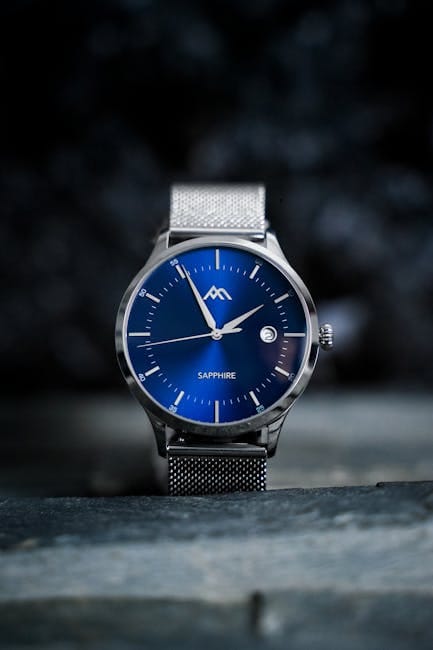
The Chronomètre Bleu is a 39mm tantalum-cased dress watch with a deep blue sunburst dial, off-center small seconds at 7 o'clock, and a power reserve indicator at 12. It's powered by the calibre 1304 — F.P. Journe's in-house manual-wind movement, running at 21,600 bph with a 56-hour reserve, constructed with 18k rose gold bridges and plates and visible through a sapphire case back. The movement layout is distinctive for the symmetrical dual-barrel design and the visible gear train architecture, and the finishing is hand-applied throughout.
Tantalum is the defining material. It's a heavy, corrosion-resistant refractory metal that's extraordinarily difficult to machine — the tools wear out faster than on titanium or stainless steel, the work-hardening behavior requires specific feed rates, and the finishing demands specialized techniques that most case makers don't have. F.P. Journe used tantalum because it produced exactly the dark gunmetal-with-a-blue-tint surface he wanted against the blue dial. The case weighs 130+ grams — denser than platinum — which creates an unusual wrist feel that's part of the ownership experience.
- 39mm tantalum case, 8.5mm thick, sapphire crystal front and back
- Calibre 1304 manual-wind, 18k rose gold movement plates
- 56-hour power reserve with dial-side indicator
- Hand-finished throughout — bevels, perlage, Geneva stripes
The "Bleu" in the name is literal. The dial is a specific shade of deep royal blue that shifts in color depending on light angle — from nearly black in low light to vivid sapphire under direct illumination. Pairing this dial with the tantalum case was Journe's aesthetic gamble, and it worked because the tantalum's own blue-grey tonality subtly echoes the dial rather than fighting with it. On wrist, the watch doesn't shout. It reveals itself slowly, which is the entire F.P. Journe design philosophy.
Why This Watch Changed the Market
Before the Chronomètre Bleu, serious independent watchmaking was largely confined to collectors who were already three or four watches deep into a mainstream luxury collection — people who owned multiple Pateks, multiple Rolexes, and had graduated to looking for something different. Journe, Dufour, Voutilainen, and the other living independents were names traded among connoisseurs but mostly unknown to first-time luxury buyers. The Chronomètre Bleu changed that dynamic by being accessible enough — $22k retail in 2009 — for collectors to step into independent watchmaking as their second or third serious purchase rather than their tenth.
What happened next was a cultural shift. Collectors discovered that the finishing quality, design integrity, and craftsmanship ownership experience of an F.P. Journe was fundamentally different from what they'd experienced with Rolex or even Patek. The watches felt made by a specific person. The details rewarded sustained examination in a way mass-produced luxury didn't. And the community around independent watches was smaller, more engaged, and less oriented around resale speculation — at least initially. The Chronomètre Bleu turned thousands of collectors into advocates for independent watchmaking as a category.
That advocacy, in turn, created demand for every other serious independent: Laurent Ferrier, Akrivia, Rexhep Rexhepi, MB&F, De Bethune, Grönefeld. Each of these names benefited from the market the Chronomètre Bleu opened. Journe himself priced subsequent models higher — the Tourbillon Souverain now starts above $225,000, the Chronomètre à Résonance is $105,000+, the Quantième Perpetual is $140,000+ — but those prices were only sustainable because the Chronomètre Bleu had trained a generation of collectors to see Journe's work as worth it.
Ownership Reality in 2026
New production Chronomètre Bleus are effectively unavailable at authorized dealers. The reference was updated in 2023 with incremental movement refinements, and current allocation goes to long-standing Journe clients exclusively. Walking into a Journe boutique in Geneva, Paris, or New York as a new collector and asking to buy one will get you a polite conversation and a firm "we have nothing to offer" response. This isn't gatekeeping for gatekeeping's sake — it's the mathematical reality of 900 annual units against global demand that could absorb 5,000 or more.
The secondary market is active but specific. Reputable sources: direct Journe boutique trade-ins (rare), Phillips and Christie's watch auctions (2-4 examples per major sale), specialist dealers like HQ Milton and Analog:Shift, and the Chronograph.com / Hodinkee Shop secondary market channels. Prices are stable at $140-165k for clean examples and have softened roughly 8% from 2022 peaks — that's less than the Rolex sports pieces have softened, which tells you something about the buyer base.
Service is the unspoken ownership reality. F.P. Journe services are performed in Geneva only. Turnaround is 9-14 months typically. Service cost for a Chronomètre Bleu runs $3,500-$5,000. The service interval is every 5-7 years if the watch is worn regularly. These numbers matter because the Chronomètre Bleu is an object you want to wear, not put in a safe — but wearing it means committing to the service cycle, which means accepting that the watch will be out of your possession for extended periods during its ownership lifetime.
What It Taught Me About Collecting
I don't own a Chronomètre Bleu. I've held one for extended periods, I've studied them through a loupe at Phillips previews, and I've talked to five owners about their experience. What I learned is that the Chronomètre Bleu rewards a specific kind of attention that most luxury watches don't ask for. It's not a watch you glance at and move on from. It's a watch that invites repeated looking — at the movement through the case back, at the dial shifting in different lights, at the hand-polished chamfers on the edge of each bridge.
Buyers who understand this invitation end up owning the piece for decades. Buyers who don't — who bought it because they saw the appreciation numbers or because they wanted a "Journe" without caring which one — end up selling within 3-5 years. The secondary market activity you see at the major auctions is substantially driven by this second group. They bought speculatively, the watch didn't reveal itself to them because they weren't looking, and they moved on.
If you're considering this piece, the test is simple. Find a way to spend 30 minutes with one before you buy — at a dealer, at an auction preview, through a friend's collection. If at the end of that 30 minutes you want to keep looking at it, the watch is for you. If you find yourself ready to move on, spend the $150k somewhere else. The appreciation numbers are real, but they're the wrong reason to acquire this specific watch. The right reason is that F.P. Journe's particular approach to watchmaking resonates with how you want to spend time with an object on your wrist. Either it does or it doesn't. The Chronomètre Bleu isn't the kind of piece you can force into meaning.