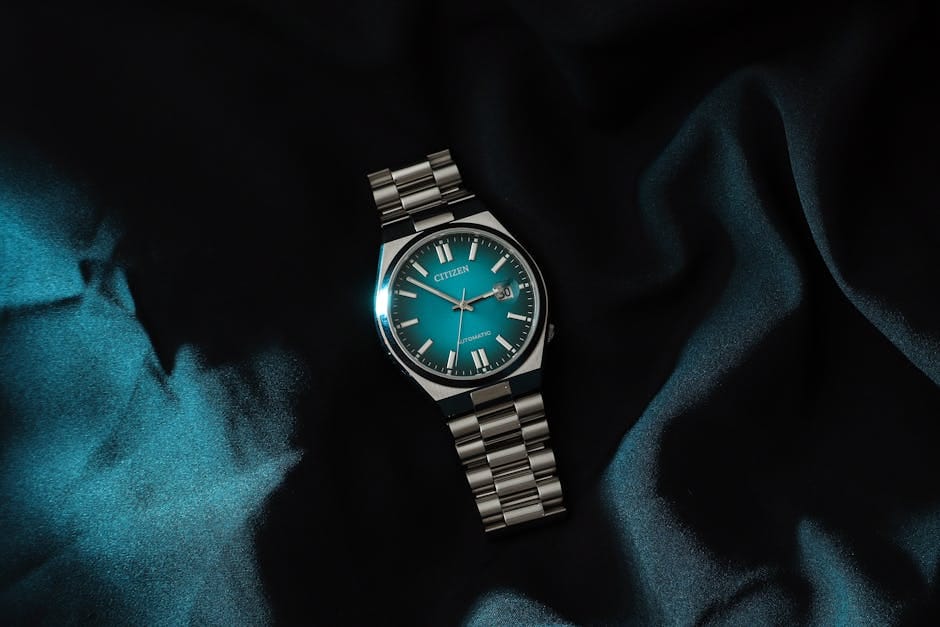
Spring Drive is Seiko's hybrid watch technology that combines mechanical power delivery with quartz-regulated accuracy. The specific engineering challenge: mechanical watches deliver smooth power through a coiled mainspring, but their timekeeping accuracy depends on a mechanical oscillator (balance wheel) that's inherently less precise than quartz oscillators. Quartz watches have precise oscillators but use electrical stepper motors that tick the seconds hand forward in discrete steps. Spring Drive resolves this by using mechanical power (mainspring driving gear train) while using a quartz crystal to regulate a specific friction-based escape mechanism called the "glide wheel."
Seiko spent 28 years developing Spring Drive from initial concept (1977) through commercial production (1999 for initial limited release, 2004 for mainstream release through Grand Seiko). The technology represents one of the most significant mechanical watchmaking innovations of the 20th century, and it's specifically the horological achievement that distinguishes Grand Seiko from other Japanese and Swiss watchmaking in a fundamental way. Understanding how Spring Drive actually works explains why the calibre 9R series watches deserve specific attention from collectors, and why the pricing premium for Spring Drive references is genuinely justified rather than marketing-driven.
The Tri-Synchro Regulator
Spring Drive's core innovation is the tri-synchro regulator — a specific mechanism that replaces the traditional balance wheel and escapement found in mechanical watches. Instead of the escape wheel/pallet fork/balance wheel system that typical mechanical watches use, Spring Drive has a single glide wheel that rotates continuously (about 8 rotations per second) driven by mainspring power through the gear train.
The glide wheel's rotation is regulated by three simultaneous interactions. First: electromagnetic braking — a coil and magnet system applied to the glide wheel that generates resistance proportional to the needed braking force. Second: a quartz crystal oscillator that measures the exact time period and calculates the required braking force to maintain precise rotation speed. Third: integrated circuit electronics that coordinate the quartz measurement with the electromagnetic braking application.
The net result: mechanical power from the mainspring drives the movement, but the glide wheel rotates at the exact speed commanded by quartz-measured time reference. The seconds hand sweeps continuously (like a mechanical movement) rather than ticking forward in discrete steps (like standard quartz). The accuracy is ±1 second per day — approximately 10x better than high-end mechanical watches and substantially better than most mainstream quartz watches.
- Mechanical power from mainspring (no battery for movement)
- Quartz crystal measures time reference
- Electromagnetic braking regulates glide wheel speed
- Integrated circuit coordinates mechanical and electronic elements
The electronic components — integrated circuit and quartz oscillator — run on minimal power generated by the mainspring-driven rotor creating electricity through an integrated dynamo. Spring Drive watches don't require batteries. The mechanical mainspring provides all power, including the electricity needed for the electronic regulation components. This is specifically different from traditional quartz watches that depend on battery power, and from traditional mechanical watches that don't use electronic components at all.
The Engineering Achievement
Spring Drive's engineering challenge was specifically combining three mechanical/electronic domains into a single reliable movement architecture. The mechanical domain requires specific gear train engineering to deliver consistent power from the mainspring through the glide wheel. The electronic domain requires quartz oscillator, integrated circuit, and electromagnetic braking components that function reliably in a mechanical watch's operational environment (including shock, temperature variations, magnetic field exposure). The regulation domain requires specific algorithms that translate quartz time measurements into braking force commands that produce the desired glide wheel speed.
Each domain individually is challenging. Combining them into a single integrated movement that fits in a wrist watch case required substantial engineering resources and decades of iteration. Seiko's 28-year development timeline reflects the specific difficulty of this integration challenge. Other manufactures considered similar hybrid approaches over the decades but none completed the engineering to commercial production.
The result: Spring Drive is a genuinely unique watchmaking technology that no other manufacturer has successfully replicated. Omega's co-axial escapement (George Daniels' invention, adopted by Omega as their high-end mechanical escapement) represents a different mechanical innovation. Silicon hairsprings (used by Omega, some Rolex references, and others) represent mechanical material innovation. Neither approaches Spring Drive's hybrid mechanical-electronic architecture. The technical uniqueness is specifically what makes Spring Drive references interesting to collectors.
Manufacturing Spring Drive movements requires specialized facilities combining watchmaking precision with electronic component assembly. Seiko's Shizuku-Ishi Watch Studio in Morioka, Japan is one of the few locations capable of this specialized manufacturing. Production quantities are specifically limited by this specialized capability — Spring Drive watches are rarer than traditional mechanical references from similar price points.
Calibre 9R Series Specific Variants
The calibre 9R65 is the foundation Grand Seiko Spring Drive movement, found in many Grand Seiko sport and dress references. Key specifications: 72-hour power reserve, power reserve indicator on dial at 7 o'clock position, date display, hacking seconds, and manual winding capability in addition to automatic winding. Accuracy specification is ±1 second per day.
Variants of the foundational 9R65 add complications. The 9R66 adds GMT functionality with independent hour hand. The 9R96 adds chronograph functionality with specific Spring Drive chronograph architecture (the chronograph hand also sweeps smoothly rather than ticking). The 9R84 is the higher-finishing variant used in specific Grand Seiko Elegance and Masterpiece references with additional refinement in component finishing and accuracy specifications.
The 9RA5 (introduced 2020) represents the latest Spring Drive evolution with improved architecture — longer power reserve (120 hours vs 72 for standard 9R65), enhanced accuracy specifications (±0.5 seconds per day vs ±1 for standard), and updated case integration allowing thinner overall watch profiles. Currently appearing in Grand Seiko Evolution 9 collection references.
Each variant represents specific engineering investment and finishing refinement. The 9R65 foundation is excellent for most buyers; the 9R84 premium finishing is appropriate for specific reference preferences; the 9RA5 represents current state-of-the-art Spring Drive engineering for collectors willing to pay for the latest technology. Price points range from approximately $4,500 for entry Spring Drive references to $15,000+ for higher-finishing or complication-enhanced references.
The Seconds Hand Sweep
Spring Drive's continuous seconds hand sweep is the most visible differentiation from both mechanical and quartz watches. Mechanical watches tick at 28,800 bph (8 ticks per second), producing a stuttering sweep. Standard quartz watches tick at 1 Hz (1 tick per second), producing discrete second jumps. Spring Drive's glide wheel rotation produces truly smooth continuous motion — the seconds hand rotates around the dial without any discrete motion or vibration.
The visual effect is subtle but specific. When you observe a Spring Drive seconds hand against a traditional mechanical seconds hand of equivalent size, the Spring Drive hand looks "still" in a specific way that's only visible through direct comparison. It's moving — accurately at 1 rotation per minute — but without the micro-motion that mechanical ticking creates. The effect is genuinely different and difficult to describe until you've seen it directly.
This visible characteristic is why Spring Drive references often gain collector admirers specifically through in-person examination. Photos and videos of Spring Drive watches look similar to mechanical watches — the seconds sweep is difficult to capture through photographic media. In person, the difference is immediately apparent to anyone paying attention to the seconds hand motion.
For collectors evaluating Spring Drive acquisition, spending time with a Spring Drive reference at a boutique or in collector community settings is essential before deciding whether the technology appeals to you. Some collectors find Spring Drive's smooth sweep more aesthetically satisfying than mechanical ticking. Others find it strange or synthetic. The preference is specifically personal, and committing to a $5-15K Spring Drive purchase without having experienced the watch in person can produce unexpected ownership reactions.
Accuracy in Daily Use
The ±1 second per day specification for standard Spring Drive calibres translates to specific daily use experience. After one week of continuous wear, your Spring Drive watch is within ±7 seconds of atomic time reference — approximately 10x better than a COSC-certified mechanical watch at ±2 to ±6 seconds per day. After one month, ±30 seconds maximum drift. After one year, ±365 seconds (±6 minutes) if you never reset.
For practical daily use, this means a Spring Drive watch reliably shows correct time without requiring periodic resetting against reference. Set it once when you receive it, and months or years later it remains accurate enough that resetting isn't required for practical timekeeping. This specific reliability is one of the key value propositions of Spring Drive ownership — the mental comfort of knowing the watch is accurate without ongoing adjustment.
Compare to mechanical watches running at -2/+4 seconds per day: after one month, your mechanical watch has accumulated 60-120 seconds of drift (1-2 minutes). You'll notice the drift when comparing to other time references (phone, computer), and you'll periodically reset the watch against accurate reference. This adjustment burden is small but persistent across mechanical watch ownership. Spring Drive eliminates this burden.
For collectors who specifically value mechanical watch ownership experience (the ritual of winding, the engagement with mechanical engineering, the tolerance of mechanical imperfection as part of the aesthetic), Spring Drive's accuracy may feel like "too much precision" — making the watch more clinical than desired. For collectors who value mechanical watchmaking as technology deployed for accurate timekeeping, Spring Drive represents the ideal combination of both qualities. Where you fall on this preference determines whether Spring Drive is appropriate for your specific collection priorities.
The Collector Case
Spring Drive represents specifically what Grand Seiko offers that no other manufacture can match. Rolex has extensive mechanical watchmaking heritage but no Spring Drive equivalent. Omega has Master Chronometer certification but no Spring Drive equivalent. Patek, Vacheron, AP, and other Swiss manufactures have various horological specialties but no Spring Drive equivalent. This specific uniqueness is either interesting to you as a collector or it's not — but the uniqueness is genuine.
For collectors building diverse collections, having one Spring Drive reference provides specific horological representation that other watchmaking approaches don't. A Spring Drive alongside a traditional Swiss mechanical (Rolex, Patek, AP), a traditional Japanese mechanical (Seiko Credor, Grand Seiko mechanical), and potentially a Spring Drive reference creates collection breadth that single-manufacture or single-technology collections can't match. Horological diversity has specific value beyond just owning multiple watches.
Specific Grand Seiko Spring Drive references worth considering: the SBGA413 "Shunbun" at $8,500 (Evolution 9 Collection, refined dial), the SBGA211 "Snowflake" at $6,700 (distinctive textured dial, iconic reference), and the SBGE285 at $7,600 (GMT Spring Drive with Blue Omori Falls dial). Each represents different aesthetic preferences within the Spring Drive category at similar price points.
For collectors willing to step up to higher-finishing Spring Drive references: the SLGA009 at $13,500 (ultra-refined Evolution 9 Collection dress watch), the SBGC251 at $14,300 (Spring Drive chronograph with GMT), or specific limited edition references that appear periodically at higher pricing. The higher-end Spring Drive references use more refined case finishing, more sophisticated dial treatments, and often the 9R84 movement variant with enhanced finishing — the specific additional value is real but not essential for entry-level Spring Drive ownership.
The broader point about Spring Drive: this is a specific horological technology worth understanding for any serious watch collector. Whether it belongs in your specific collection depends on personal preference and collection philosophy. But dismissing Spring Drive as "just Japanese watchmaking" misses the genuine engineering innovation that distinguishes this technology from both mechanical and quartz traditions. For the right collector, Spring Drive provides specific horological experience that nothing else in watchmaking matches — which is specifically what makes it collectible in ways that generic "high-quality Japanese watches" don't provide.