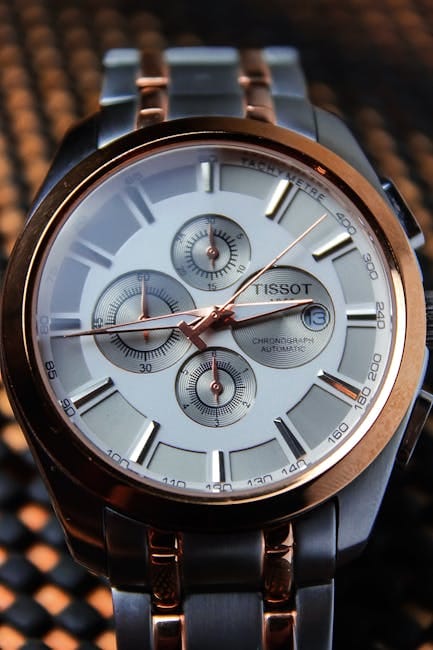
Zenith launched the Defy Skyline in 2022 with specific positioning: integrated bracelet sport watch with high-frequency El Primero movement architecture and a distinctive 1/10 second indicator at 9 o'clock. At $9,500 retail for the steel Blue Skyline variant, Zenith offers a compelling alternative to Patek Nautilus/AP Royal Oak wait lists and Vacheron 222 scarcity. The watch has gained specific collector following over three years of production and represents one of the better overall value propositions in the integrated bracelet sports watch category.
Zenith has specific challenges in the luxury watch landscape. The brand has legitimate history — the El Primero movement, introduced in 1969, is one of the three first automatic chronograph movements in watchmaking (alongside the Chronomatic and Seiko's contemporaneous development). But Zenith lacks the cultural recognition of Patek, AP, and Rolex, which limits its ability to command the premium pricing these brands receive. The Defy Skyline specifically represents Zenith's attempt to establish a modern integrated bracelet sport watch identity that could anchor the brand's contemporary positioning.
The Calibre 3620 Movement
The Defy Skyline uses Zenith's calibre 3620 — a modification of the classic El Primero architecture with specific engineering updates. Key specifications: 36,000 bph (5 Hz high frequency), 60-hour power reserve, COSC chronometer certification, and specific 1/10 second display mechanism that allows visual indication of tenths of seconds through a subtle hand movement.
The 36,000 bph frequency is specifically elevated from the 28,800 bph typical of most Swiss chronograph movements. At 5 Hz, the El Primero-derived architecture produces more precise time measurement capability — specifically relevant for chronograph timing applications where precise fractions of seconds matter. The 3620 takes advantage of this high frequency capability while eliminating the chronograph complication, producing a time-only movement with specific mechanical character.
The 1/10 second indicator at 9 o'clock is the Defy Skyline's distinctive dial complication. A small subdial rotates to show tenths of a second in specific way that references Zenith's chronograph heritage while functioning as time-only display. The subdial shows 10 markings (0-9) representing each tenth of a second, with a small hand completing one rotation every second. This indicator has aesthetic value specifically for El Primero enthusiasts and watchmaking detail appreciation.
Finishing on the calibre 3620 is competent. Geneva stripes on bridges, perlage on plates, blued screws, and functional finishing throughout. Compared to Patek, Vacheron, or AP manufacture calibres at comparable price points, the 3620 is slightly less refined in hand-finishing execution but delivers genuinely in-house movement engineering. The value proposition: Zenith manufacture movement at Tudor-Black-Bay-58 pricing level but with higher complication and more sophisticated engineering.
- Case 41mm × 10.8mm, stainless steel integrated bracelet
- Calibre 3620 automatic, 5 Hz high frequency
- 60-hour power reserve, COSC chronometer
- 1/10 second indicator at 9 o'clock
The Case and Bracelet
The Defy Skyline case is 41mm × 10.8mm — slightly smaller than many modern sports watches, positioned specifically to work across wrist sizes while maintaining presence. Case construction is stainless steel with alternating brushed and polished surfaces. The bezel is polished octagonal with specific geometric integration into the case lugs that references the Defy line heritage.
The integrated bracelet is distinctive to the Skyline with specific five-link architecture that's different from both the Royal Oak (three-link) and the Nautilus (five-link different geometry). The bracelet uses a butterfly deployant clasp with Zenith signature and easy-to-adjust micro-adjustment. On-wrist, the bracelet sits with specific weight distribution that works across wrist sizes in the 6.5-8 inch range.
Case finishing is genuinely good for the price point. The brushed and polished transitions are crisp and executed cleanly. The bezel's octagonal geometry is precisely defined. The case back (sapphire showing movement) is well-finished with specific Zenith branding elements. Under examination, the Skyline holds up to comparison with $30-50K Swiss integrated sports watches in case finishing quality.
Dial options include multiple color variants: the defining "Blue" (deep navy with sunray effect), white/silver, black, and newer variants introduced across 2024-2025. Each dial features the 1/10 second subdial at 9 o'clock and the Defy Skyline's signature "star" pattern (subtle geometric dial texture). The dial typography and applied indices are refined at typical Swiss manufacture standards.
Why Zenith Underperforms in Recognition
Despite genuinely good watches at competitive pricing, Zenith lacks the cultural penetration of Rolex, Patek, or AP. Several factors explain this gap. The LVMH ownership (Zenith is owned by LVMH alongside Tag Heuer and Bulgari) creates internal resource competition that limits specific brand marketing investment. Zenith production volumes are relatively small, which limits brand visibility. The brand's positioning specifically between Tag Heuer (more accessible pricing) and Hublot (more aggressive marketing) leaves Zenith in ambiguous brand territory.
Marketing investment is specifically smaller than competitor brands. Zenith's advertising presence in luxury watch publications is lower than the established manufactures. Celebrity endorsement and ambassador relationships are fewer. The brand's visibility at major watch events (Baselworld historically, Watches & Wonders currently) is proportional to its market position rather than dominant.
However, this underperformance creates specific value opportunity for collectors. Zenith watches deliver comparable watchmaking quality to more recognized brands at meaningfully lower prices. If you value watchmaking quality per dollar more than brand recognition, Zenith represents genuine opportunity. If brand recognition matters for specific social signaling, Zenith underperforms and Rolex or Patek serve those needs better.
The El Primero movement's historical significance is specifically what sophisticated collectors recognize in Zenith ownership. Owning an El Primero-derived movement (like the calibre 3620 in the Skyline) connects you to a specific horological heritage that other sports watch brands don't match. For collectors who engage with watchmaking history, this heritage provides ownership value beyond brand recognition.
Market Position in 2026
Current market dynamics: Defy Skyline retail prices around $9,500 for steel references, approximately $13,500-$15,000 for two-tone or gold variants. Secondary market pricing runs $8,000-$9,500 for clean examples (slight discount from retail). Unlike supply-constrained Patek/AP/Rolex references, Zenith Defy Skylines are readily available at authorized dealers with minimal waitlists.
Availability is specifically the Skyline's strength. You can walk into a Zenith authorized dealer, examine multiple dial color options, and complete purchase within 1-3 months. This accessibility differs dramatically from Patek Nautilus (36+ month waits), AP Royal Oak (24-36+ month waits), or Vacheron 222 (limited edition exclusivity). For buyers who want integrated bracelet sports luxury without the acquisition drama, the Skyline delivers directly.
Resale trajectory: secondary market pricing has been stable since 2022 launch. No dramatic appreciation (unlike Nautilus/Royal Oak during peak hype years) but no significant depreciation either. For a watch you intend to wear rather than trade, this stability is specifically positive — your ownership cost is primarily insurance and service rather than depreciation.
Investment characteristics differ meaningfully from supply-constrained references. If you buy a Nautilus or Royal Oak now at secondary market prices, future appreciation is possible but uncertain given current market correction patterns. If you buy a Defy Skyline now, you're paying approximately current retail and likely receiving ~90-95% resale value if you sell in 3-5 years. Neither pattern is objectively better — they serve different buyer priorities.
Who Should Buy
The Zenith Defy Skyline makes sense for specific buyers. Buyers who want integrated bracelet sports luxury aesthetic without paying secondary market premiums or waiting years for authorized dealer allocation. Buyers who specifically value the El Primero movement heritage and 5 Hz high frequency engineering. Buyers building diverse collections and wanting Zenith representation alongside Rolex, Patek, or AP references. Buyers comfortable with Zenith's lower brand recognition in exchange for watchmaking value per dollar.
The Skyline doesn't work for buyers whose primary priority is cultural recognition — Patek or Rolex serve those needs better. Buyers specifically wanting investment appreciation potential — other references offer better expected outcomes. Buyers who want the complete manufacture relationship experience that Patek, AP, or Rolex customer programs provide — Zenith's customer program is more modest. Buyers whose wrists or aesthetic preferences don't align with the 41mm × 10.8mm Skyline sizing.
For collectors who've specifically experienced Nautilus/Royal Oak waitlist frustration and want an alternative path to integrated bracelet sports luxury ownership, the Defy Skyline is one of the strongest current options. The value proposition is real — you get legitimate Swiss manufacture watchmaking with distinctive movement at price substantially below secondary market pricing for comparable references.
Alternatives within the Zenith catalog: Chronomaster Sport (El Primero chronograph, different case architecture) at $12,400, Chronomaster Original (vintage-inspired El Primero) at $9,700, Defy Extreme (larger Skyline-adjacent reference) at $13,400. Each offers different character within Zenith's collection. The Defy Skyline is specifically the integrated bracelet sports watch focus.
Ownership Economics
Zenith service intervals are 5-7 years for calibre 3620 movements. Service cost at Zenith authorized centers runs $650-$950 for standard service — competitive with Omega pricing and substantially less than Patek or Rolex service. Service turnaround is 8-14 weeks typically through US authorized centers (New York Zenith Boutique and specific Zenith authorized service partners).
Over 20 years of ownership, expect 3-4 service cycles at $650-$950 each = $2,000-$3,800 total service cost. Insurance on a $9,500 watch through specialist coverage runs approximately $120-200 annually. Annual ownership cost (amortized service plus insurance) runs approximately $200-400 — substantially less than ownership cost for higher-priced integrated sports luxury alternatives.
For multi-decade ownership scenarios, the Zenith Defy Skyline represents specifically reasonable economics. Initial purchase at $9,500, 20-year service and insurance costs around $5,000-$6,000 total, expected residual value around $5,000-$7,000 if maintained properly. Net ownership cost is approximately $7,500-$10,000 across two decades — substantially less than comparable Patek or AP references cost across the same ownership window.
The specific assessment: the Zenith Defy Skyline is a genuinely good watch at a reasonable price with specific horological distinction through the El Primero calibre 3620 movement. It's not the most prestigious integrated bracelet sports watch in current production, but it's arguably the best value-per-dollar option in the category for buyers who aren't fixated on brand recognition. For collectors who specifically value El Primero heritage and don't need Patek/AP cultural positioning, the Defy Skyline delivers what these collectors actually want. The broader lesson: integrated bracelet sports luxury at reasonable price exists in 2026 — you just have to look beyond the three or four brands that dominate cultural conversation about the category. Zenith is one of the answers worth taking seriously.