Nobody mentions the service bill when they sell you on a mechanical watch. The salesperson talks about the in-house movement, the 70-hour power reserve, the way the seconds hand sweeps instead of ticks. Then five or six years later a small envelope of a quote arrives and the number has a comma in it. A full service on a steel Rolex through the brand runs roughly $800–$1,000 in 2026. Send a Patek Philippe back to Geneva and you can clear $1,500 before anyone touches a complication. That recurring cost is the part of luxury watch ownership that the unboxing videos quietly skip.
What you are actually paying for
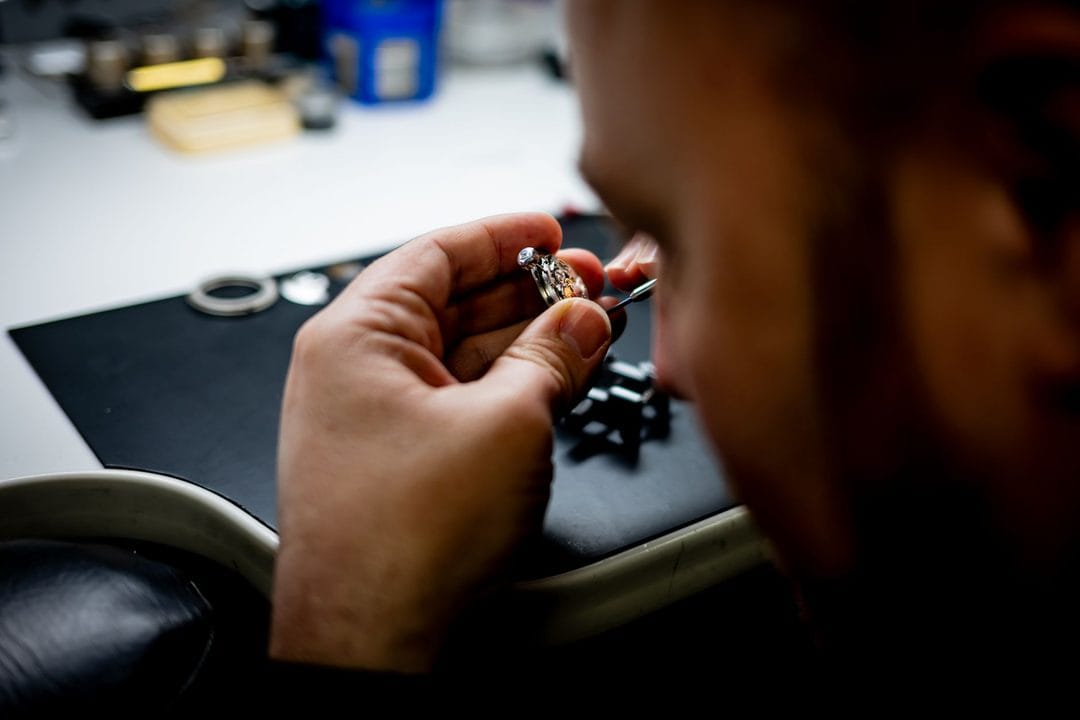
A mechanical service is not an oil change, even though brands love that analogy. The watchmaker disassembles the movement down to individual bridges and wheels, cleans every part in an ultrasonic bath, inspects the mainspring and the pivots under magnification, replaces gaskets and any worn components, re-lubricates with the correct oils at each friction point, reassembles, regulates the timing across multiple positions, and pressure-tests the case. On a chronograph or a perpetual calendar that is days of bench time, not hours. The labour is the cost. The parts are usually trivial by comparison unless something has actually broken.
The interval matters as much as the price. The old "every three to five years" rule is mostly a relic now. Rolex officially recommends service roughly every ten years on its current calibres, and most modern movements with better seals and synthetic lubricants comfortably stretch past the old window. If a local jeweller tells you a 2021 Omega needs servicing in 2026 because "it's been a few years," walk out. A watch that keeps good time, winds smoothly, and still resists water does not need to be opened on a calendar. You open it when the rate drifts, the power reserve drops, or the crown feels gritty.
Brand service versus the independent watchmaker
This is where the real money decision lives, and it is not as obvious as the brands want it to be.
Send the watch to the manufacturer and you get genuine parts, a fresh warranty on the work, factory pressure testing, and often a light cosmetic refinish thrown in. You also get a long wait — three to six months is normal for Rolex and Patek during busy periods — and a bill at the top of the range. A good independent watchmaker who specialises in your brand will often do equivalent mechanical work for 30–50% less, turn it around in weeks rather than months, and actually talk to you about what they found inside. The catch is parts access. Rolex, Omega, and several other Swatch Group and Richemont brands have tightened the supply of genuine components to independents over the last decade, so a truly correct repair on a current model sometimes can only come from the official channel.
My rule is simple. For a current-production Rolex, Omega, or anything still under or near warranty, use the brand or an officially accredited service centre — the parts question alone settles it. For a vintage piece, an out-of-production movement, or a watch where you care more about preserving original parts than chasing a factory-fresh look, find a respected independent and never let the manufacturer near it. Brand restoration departments have a long, well-documented habit of swapping faded dials and worn hands for new old-stock and binning the originals, which is exactly what destroys value on a vintage market that pays a premium for honest patina.
The numbers nobody runs before buying
Here is the arithmetic that should happen before the purchase, not after the first quote. Take the watch's price, assume one service roughly every ten years, and add the realistic service cost over how long you intend to keep it.
- A steel Rolex Submariner held for twenty years: two services at around $900 each, so roughly $1,800 on top of the purchase — genuinely modest against the watch's value and its resale.
- A Patek Philippe with a perpetual calendar held the same twenty years: services that can run $2,000–$4,000 each depending on the complication, and that is before anything wears out. The complication you paid for is the complication that costs the most to maintain.
- A $200 Seiko automatic: most independents will service it for $150–$250, which is close enough to the watch's price that many owners simply run it until it stops and replace it. That is a completely rational choice, not a failure of stewardship.
The lesson is that service cost scales with complication and with brand prestige, not with how much you enjoy wearing the thing. A three-hand automatic from almost any serious brand is cheap to keep alive for decades. A minute repeater is a lifelong financial relationship.
How to spend less without cutting corners
Stop servicing on a schedule and start servicing on symptoms — that change alone saves most owners a service or two across a lifetime. Wind a manual watch fully before wearing it rather than topping it up all day, which spreads mainspring wear. Keep it away from speakers, tablet covers, and anything with a strong magnet, because magnetised movements are one of the most common reasons a watch suddenly runs fast and the fix is often a five-minute demagnetisation rather than a full service. And get the gaskets and water resistance checked before, not after, you take a watch swimming — a pressure test costs very little and a flooded movement costs everything.
One more thing worth saying plainly: a watch you never service and never wear is not being preserved, it is quietly degrading. Lubricants dry out and congeal whether the watch runs or sits in a drawer. The hermetically sealed "investment in the safe" is a worse store of mechanical health than the daily wearer that gets used, checked, and occasionally serviced. If you are going to own the thing, wear it — then budget honestly for keeping it running, the same way you budget for the strap, the insurance, and the box you'll eventually lose the warranty card from.