A. Lange & Söhne Lange 1: German Craft at Patek-Adjacent Prices
The Lange 1 costs $42,000-$52,000 depending on configuration. It's the most honestly-finished watch at its price in 2026, and you can actually buy one.
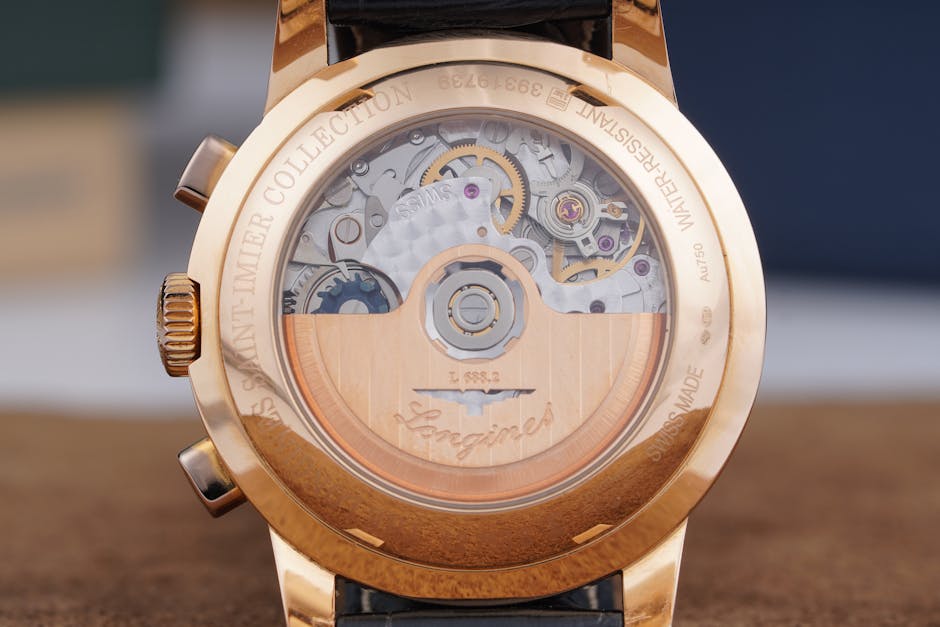
The A. Lange & Söhne Lange 1 in white gold retails for $42,300 in April 2026. The Lange 1 Daymatic adds $8,000-$10,000 depending on configuration. The Lange 1 Tourbillon reaches $148,000. Across the entire collection, these are prices that sit 30-50% below equivalent Patek Philippe references with comparable finishing quality and complication levels. That value gap isn't recent — it's been consistent since Lange re-established production in 1994 after the reunification of Germany — but 2026 market conditions make the argument for Lange ownership more compelling than it's been in the past decade.
Here's the specific reason: Patek Philippe's supply-constrained retail strategy has made acquisition of desirable Patek references increasingly difficult through authorized channels. Lange operates differently. You can walk into a Lange boutique in New York, Geneva, Singapore, or Dubai, discuss the Lange 1 with the boutique team, and expect to purchase one within 3-12 months depending on specific configuration availability. This availability transforms the cost-benefit calculation between "Patek you can't actually buy" and "Lange you can." For collectors who want haute horlogerie ownership in real-time rather than as a future aspiration, Lange is the current practical path.
The Lange 1 Design
The Lange 1 was launched in 1994 as one of four references that re-established A. Lange & Söhne after forty-five years of dormancy following World War II and Soviet-era East German industrial policy. The design decisions made in 1994 remain the basis of every current-production Lange 1 three decades later. The asymmetric dial layout, the outsized date window at 2 o'clock (derived from the 5-minute clock mechanism of the Dresden Opera House), the off-center main time display at the upper left, and the power reserve indicator at 3 o'clock together create a dial configuration that's instantly recognizable as Lange.
This asymmetric layout was controversial at launch in 1994. Swiss traditionalists argued that watches should have symmetric dials, that the Lange 1's composition was jarring, and that the outsized date was gimmicky. Thirty years later, the design has been vindicated — the asymmetric layout works in ways symmetric dials can't, because human visual perception processes slightly off-center compositions with more attention and interest than perfectly symmetric ones. The Lange 1 dial rewards repeated looking in ways that, for example, a standard Calatrava dial doesn't.
- Lange 1 case dimensions: 38.5mm × 9.8mm, white gold, pink gold, or platinum
- Calibre L121.1 manual-wind, 72-hour power reserve, 21,600 bph
- Outsized date derived from Dresden 5-minute clock
- Asymmetric dial with power reserve indicator and off-center time
The outsized date deserves specific attention. The Lange 1 date uses two separate rotating discs (one for tens, one for ones) operating through a patented jumping mechanism. At midnight, both discs advance simultaneously — not sequentially — which prevents the awkward 15-second "31 rollover to 1" display that afflicts conventional date mechanisms. The mechanical complexity required for this synchronized jump is substantial, and it's the kind of detail that demonstrates Lange's commitment to solving design problems through engineering rather than accepting compromises.
Movement Finishing Excellence
Calibre L121.1 is the current-production Lange 1 movement — manually wound, 72-hour power reserve, 31 jewels, with specific architectural features that distinguish it from Swiss contemporaries. The German silver main plate (untreated, it will tarnish over decades into distinctive bronze tones that collectors value) is hand-engraved with the chronometer's oscillation frequency and Lange signature. Hand-engraved balance cock — each one uniquely signed by the engraver who worked on it — is the defining Lange finishing element.
Other finishing details: hand-polished bevels on all bridges (visible through the sapphire case back and representing the highest standard of Swiss-German anglage), blued screws in gold chatons, polished countersinks on all jewel settings, perlage on non-visible plate surfaces, and Geneva stripes on bridges applied manually rather than by machine. The total finishing work per movement runs 60-80 hours of specialized hand finishing, which is at or above Patek Philippe's standard for equivalent-tier movements.
Beyond surface finishing, the mechanical architecture is refined for reliability and accuracy. Swan-neck regulator with fine-adjustment screws, three-quarter plate construction typical of German watchmaking (providing rigidity advantages over Swiss plate-and-bridge architecture), diamond end stone on the balance (a Lange signature detail representing the final refinement of friction-reduction engineering), and specific escape wheel and pallet fork geometries optimized for the calibre's regulation.
The Daymatic Alternative
The Lange 1 Daymatic adds automatic winding through a specific rotor design hidden beneath the dial — the watch appears to be manual-wound from the back (the movement bridge architecture is similar to the L121.1), but in fact contains a micro-rotor system that provides automatic operation. The Daymatic also includes day-of-week indication through a separate aperture, displayed symmetrically at 9 o'clock to balance the date at 3 o'clock.
Pricing on the Daymatic: $52,000 retail in white gold, $58,000 in pink gold, $75,000+ in platinum. The premium over the standard Lange 1 is $10,000-$12,000 for the automatic winding and the day indication. Whether this is worth it depends on use case. If you'll wear the watch 15+ times per month, the manual-wind Lange 1 is fine and possibly preferable (you develop a morning winding ritual that's part of ownership satisfaction). If you'll wear it 3-8 times per month as a rotation piece, the Daymatic's automatic winding is genuinely useful — you won't be resetting the watch every time you pick it up.
The Daymatic's dial configuration is slightly busier than the standard Lange 1 because of the additional day indication. For buyers who value the purity of the original 1994 composition, the Lange 1 manual is more correct. For buyers who want the complication functionality and don't mind the busier dial, the Daymatic is the upgrade path.
Alternative Lange References
The broader Lange collection offers several other entry points worth considering. The Saxonia at $27,000-$32,000 retail is the entry-level Lange reference — smaller case (35mm), manual-wind, minimal complications, but identical movement finishing to the Lange 1. For a collector who wants Lange ownership at the most accessible price point, the Saxonia is the correct choice. The 1815 at $32,000-$45,000 is a vintage-inspired manual-wind reference with a more classical dial layout.
The Odysseus in steel at $36,900 is Lange's sports watch — integrated bracelet, larger case (40.5mm), and a different aesthetic approach than the classical Lange references. The Odysseus has been Lange's most demanded reference since launch in 2019, with waitlists running 12-24 months at most boutiques. If you want a Lange specifically for versatility and active wear, the Odysseus works well. If you want a Lange for the German haute horlogerie tradition, the Lange 1 or Saxonia is the right choice.
The higher complication Lange references — Datograph (column wheel flyback chronograph at $85,000+), Zeitwerk (jumping hour and minute display at $95,000+), Tourbograph Perpetual (multiple complications at $480,000+) — are specialist pieces for collectors building toward specific high complications. These shouldn't be first Langes.
The Lange Ownership Experience
Owning a Lange 1 communicates specific things to specific audiences. To most people, including most general luxury watch recognizers, a Lange 1 reads as "unknown dress watch" — the brand doesn't have the cultural penetration of Rolex, Patek, or AP. To serious watch collectors, a Lange 1 communicates "this person understands haute horlogerie at a technical level" — it's the watch collectors buy when they've stopped caring about status recognition and started caring about objective quality.
This is either the communication function you want or it isn't. If you're at a business dinner where clients will recognize a Patek Nautilus and not recognize a Lange 1, the Lange is less effective as social signaling. If you're at a collector event where sophisticated audiences will recognize both and weight the Lange more heavily as an informed choice, the Lange is more effective. Most collectors who acquire a Lange 1 do so at a stage in their collecting journey where this tradeoff makes sense — they've moved past status-signaling and into quality-appreciation priorities.
Service infrastructure is smaller than Rolex but adequate. Authorized Lange service centers in New York, Geneva, Tokyo, Beijing, Dubai, and Munich handle all current-production references. Service turnaround runs 8-16 weeks for standard services. Cost is $1,500-$2,800 for typical Lange 1 service, higher for complication models. Service intervals are 5-7 years for regular wear, which is typical for this tier of watchmaking.
If you can acquire one Patek Philippe reference right now, do so. If you can't — which is the realistic situation for most collectors entering this price tier in 2026 — the Lange 1 is the correct alternative. You get comparable (in some specific measures, superior) finishing quality, you can actually purchase the watch within months rather than years, and you join a collecting community where the other owners tend to be more technically knowledgeable and less investment-focused than the current Patek buyer cohort. That's a better ownership experience in most dimensions that matter.